
Let’s face it. Every bike tour begins with a thought, an idea, an image of new locales to explore and new places to visit. This is the thrilling kernel of anticipation that get’s us out on the road and on our way. So whether you plan a week “anchored” in place exploring local cycling routes, or an extended tour across state lines or national borders, you will need at least a general idea of your route, or better yet, sufficient route planning to ensure pleasant travel on bike-friendly roads.
I’m going to assume you are interested in DIY self-guided touring. Martine and I began our bike touring adventures quite modestly, choosing a romantic get-away and usually an overnight, a nice bed and breakfast, and a day of cycling. Anyone with a bicycle can do this, with or without the romance. So while still new to touring ourselves, suffice to say that we have learned some crucial elements of route planning worth sharing.
Learn Your Pace
For starters, let’s assume that you are familiar with riding your bike under load, or if you are a roadie, doing extended day rides. At the very least the touring cyclist will need to think about places to spend the night, and to do this you need to know how many miles of riding each day constitutes a comfortable pace. How much stuff you carry is another critical, and closely related, decision.
It’s All About You
How you plan your route is all about your personality. Like to keep things a little loose? A few paper maps may suffice. Not so comfortable with unknown roads in unknown places? A GPS computer and a ride planning app is probably more your speed. Not sure how to answer this question? Go for the full-on GPS course and turn-by-turn navigation. I’ll admit that the buzzer warning from a GPS device indicating that you are “off course” can be reassuring when traveling in unknown territory. If all this sounds like a foreign language, you may just need a bit of practice and experience. Or if you’d like someone else to plan your route, time to contact a bike touring company!
Where Others Have Gone Before
There are few places in the world that cyclists have not passed through. And today there are vast resources available that provide the cyclist’s point of view on routes, roads and places to visit. Contact a local bike club, obtain day routes from club websites, explore public routes available on internet services like Ride with GPS, check out state/province Departments of Transportation and area nonprofit groups that promote cycling. Read cycling forums and blogs for favorite routes.
 Find Cycling Maps
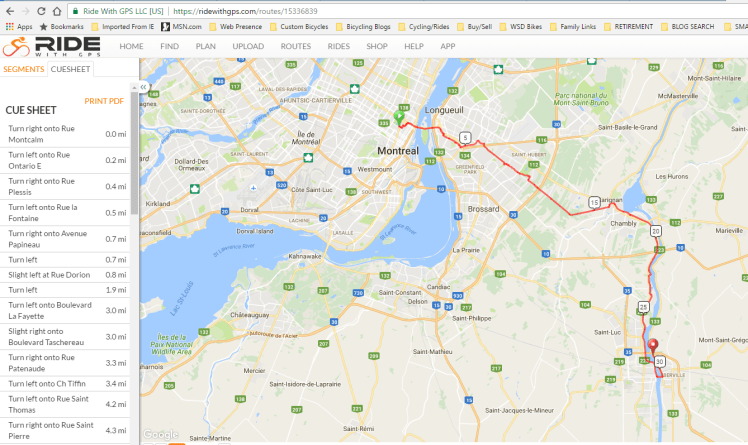
Select a route or an area based on available cycling maps. There was a time when printed automotive maps and a highlighter was all the rage for cycling tourists. Nowadays you can go ahead and ditch the folded maps and get much better results with online resources. Obtain online bikeway maps and even touring cue sheets from local cycling interest groups and sometimes local government departments. Learn route planning with Ride with GPS and similar online services (it’s not difficult). Obtain cycling maps printed or online from the Adventure Cycling Association. If all else fails, find those needed connector roads with Google Maps for Bicycle.
Plan Your Accommodations
Whether using your credit card, camping or visiting with friends, a little planning ahead will save you from a long, tiring day in the saddle and no place to sleep. In our experience, bed and breakfast establishments are often very accommodating to traveling cyclists. More importantly, in the rural areas that frequently offer the best cycling roads, there may be very few places to spend the night. You may need to adjust your route accordingly. WarmShowers offers a no-cost alternative to the cycling tourist. Finally, if the spirit moves you, you can just wing it. Just ride, and when you’re finished riding for the day, ask around in town for a place to stay.
One Way or a Loop?
This can be a challenging decision. One-way routes will often allow the touring cyclist to experience more varied terrain, more diverse sights and cover greater distances. As long as have a way to get back. Loop routes conveniently return you to the start/end location and usually a vehicle, but are more restricting and difficult to plan. For one-way tours, leave your vehicle at the end point, and arrange bike and rider transport out to the start location. Contact local bike clubs and shops to find a driver with a bike rack, or in some cases you may hire commercial services. A very large loop is another option. Anything in excess of 250 miles will no longer feel like a loop.
Consider After Cycling Plans
When your riding day is done and the bikes are safely stowed, what do you intend to do with the rest of the day? Are you passing through or do you want to stay a a while to get to know a town or city? Depending on where your adventure takes you, just finding a good meal may be a significant challenge. Or perhaps relaxing with a beer at a local night spot will nourish the soul. Martine and I have found that incorporating an “anchor” town or city along a route is a great way of breaking up a tour. Spending an extra day or two on foot or taking the metro and seeing the sights is a wonderful way to absorb some of the local flavor of a place. If this appeals to you, be sure to build in the time on your bike tour.
Too Much to Handle
If all of this seems like just too much to handle, there is an alternative. Get on your bike and just ride, ride all day, stop sometime in the late afternoon while there is still time to enjoy a decent meal and the sunset. Get a room at a nice B&B for the night and rest. Awake in the morning. Repeat.
 Velo Spirits