
Aside from the beautiful summer weather, lovely scenery and our interest in speaking French, there is one thing that has brought us back to Quebec for bicycle touring for two consecutive seasons: La Route Verte (The Greenway). Little known in the U.S. and yet at the same time world famous, Route Verte encompasses more than 5000 kilometers of dedicated bike trails, lanes and roads, criss-crossing Quebec Province from the western border with Ontario to the remote Gaspe peninsula. Our tour took us along only a fraction of these routes through Centre du Quebec, the area bounded by Quebec City, Montreal and Sherbrooke. Even so, we rode from urban centers to country roads to the banks of the St. Lawrence River.

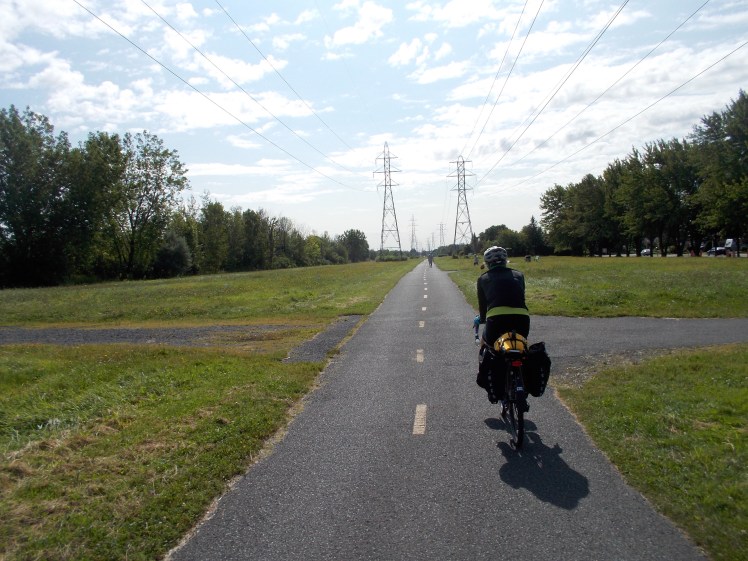
Cited by National Geographic at one of the top ten cycling routes in the world, Route Verte is roughly 40 percent segregated trails, including many rail trails and power line rights of way, and 60 percent on-road surfaces including wide shoulders, low-traffic roads and special bike lanes. Even through our relatively brief tour, the variety of forms taken by the Route Verte system is astounding. Although we were guided by the GPS enabled bike computer, we were frequently relieved the see the blue and green Route Verte signs to verify that we were on the right route.
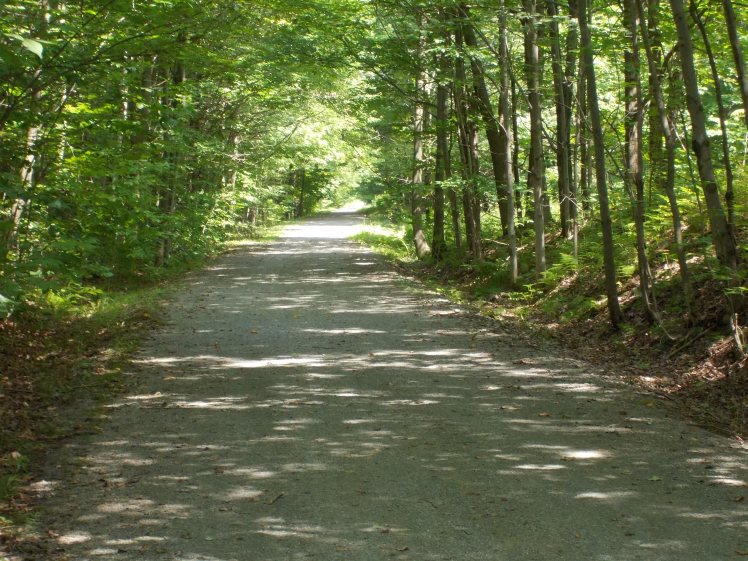

Close to small towns like Granby and Waterloo we often encountered bicycle route intersections along the paved paths, complete with signs denoting directions and distances to various locations, while at other times we traveled considerable distances through the woods on packed gravel. The latter included about three hours traversing Yamaska National Park.

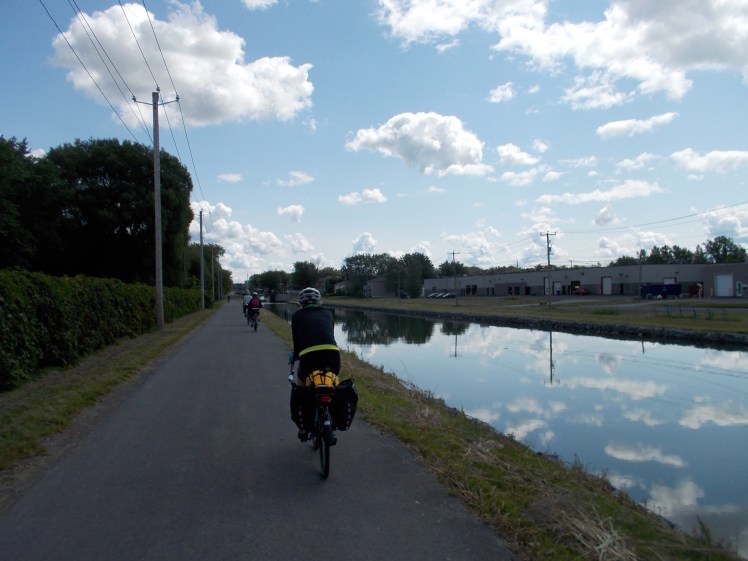
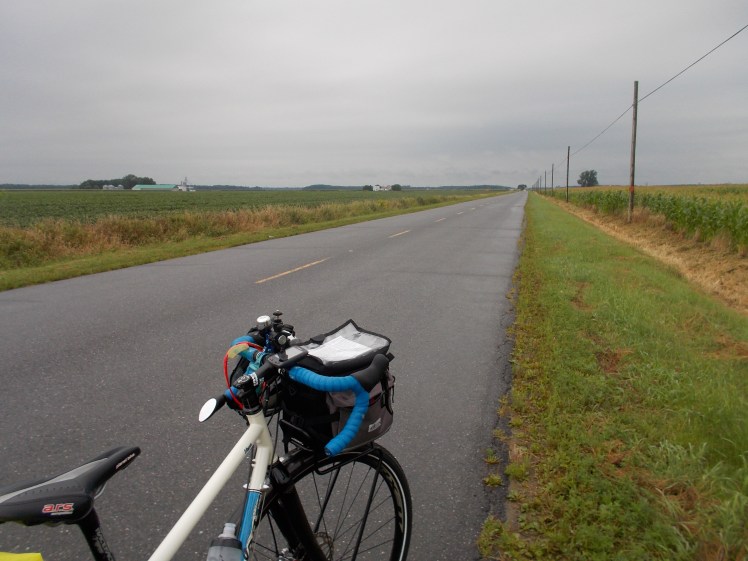
Much of our route was along low-traffic country roads, some of which stretched straight as the proverbial arrow into the distance. At other times we were riding suburban routes that featured pictorial “share the road” signs or even giant bicycle icons painted on the pavement.


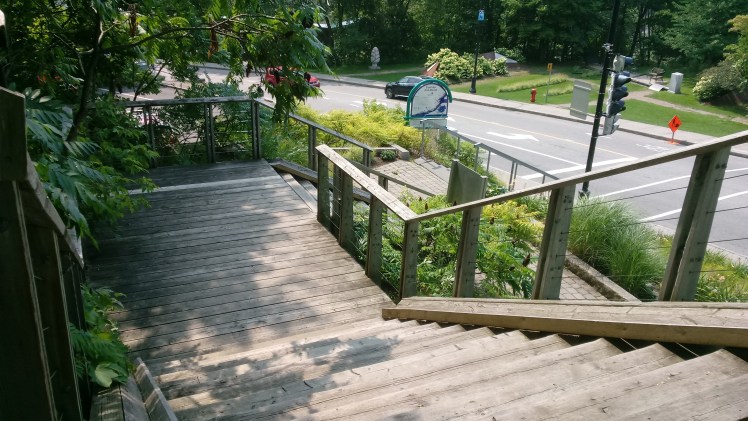
We also encountered some fairly unique bike lane features. Riding south from Montreal there is a bicycle overpass consisting of a fantastic spiral structure that elevated us above a vast railroad yard. On another day while entering Quebec City, our bike route indicated that were we turning into what appeared to be a set of wooden stairs climbing up the hillside. On closer examination and after confirming with a friendly passerby, we realized these were “cycle rail” stairs to which are attached wooden rails along which cyclists push their bikes from one platform to the next. Lends a whole new meaning to the term “climbing.”


 Velo Spirits